





































Creation vs. Evolution
Thursday, September 11, 2003 by grayhaze | Discussion: WinCustomize Talk
I thought I'd pre-empt this discussion before Kona's comment in the other thread sparked it off there. There is concrete proof that we evolved, but no proof that we were created. What's you're opinion, and why?
To quote Phoebe from Friends: "I guess the real question is who put those fossils there and why?"
To quote Phoebe from Friends: "I guess the real question is who put those fossils there and why?"
 |
|
Page 48 of 56 | |
|
|---|
The Rated PG
Reply #942 Sunday, November 2, 2003 11:49 PM
As Science Digest reported:
"Scientists who utterly reject Evolution may be one of our fastest-growing controversial minorities... Many of the scientists supporting this position hold impressive credentials in science." 3
One example is the late Dr. Arthur E. Wilder-Smith, an honored scientist with an amazing three earned doctorates. He held many distinguished positions. 4 A former Evolutionist, Dr. Wilder-Smith debated various leading scientists on the subject throughout the world. In his opinion, the Evolution model did not fit as well with the established facts of science as did the Creation model of intelligent design.
"The Evolutionary model says that it is not necessary to assume the existence of anything, besides matter and energy, to produce life. That proposition is unscientific. We know perfectly well that if you leave matter to itself, it does not organize itself - in spite of all the efforts in recent years to prove that it does." 5
Secular researcher Richard Milton summarized the current world situation: "Darwinism has never had much appeal for science outside of the English-speaking world, and has never appealed much to the American public (although popular with the U.S. scientific establishment in the past). However, its ascendancy in science, in both Britain and America, has been waning for several decades as its grip has weakened in successive areas: geology; paleontology; embryology; comparative anatomy. Now even geneticists are beginning to have doubts. It is only in mainstream molecular biology and zoology that Darwinism retains serious enthusiastic supporters. As growing numbers of scientists begin to drift away from neo-Darwinist ideas, the revision of Darwinism at the public level is long overdue, and is a process that I believe has already started." 6


Reply #942 Sunday, November 2, 2003 11:49 PM
As Science Digest reported:
"Scientists who utterly reject Evolution may be one of our fastest-growing controversial minorities... Many of the scientists supporting this position hold impressive credentials in science." 3
One example is the late Dr. Arthur E. Wilder-Smith, an honored scientist with an amazing three earned doctorates. He held many distinguished positions. 4 A former Evolutionist, Dr. Wilder-Smith debated various leading scientists on the subject throughout the world. In his opinion, the Evolution model did not fit as well with the established facts of science as did the Creation model of intelligent design.
"The Evolutionary model says that it is not necessary to assume the existence of anything, besides matter and energy, to produce life. That proposition is unscientific. We know perfectly well that if you leave matter to itself, it does not organize itself - in spite of all the efforts in recent years to prove that it does." 5
Secular researcher Richard Milton summarized the current world situation: "Darwinism has never had much appeal for science outside of the English-speaking world, and has never appealed much to the American public (although popular with the U.S. scientific establishment in the past). However, its ascendancy in science, in both Britain and America, has been waning for several decades as its grip has weakened in successive areas: geology; paleontology; embryology; comparative anatomy. Now even geneticists are beginning to have doubts. It is only in mainstream molecular biology and zoology that Darwinism retains serious enthusiastic supporters. As growing numbers of scientists begin to drift away from neo-Darwinist ideas, the revision of Darwinism at the public level is long overdue, and is a process that I believe has already started." 6

Aleatoric
Reply #943 Sunday, November 2, 2003 11:53 PM

Reply #943 Sunday, November 2, 2003 11:53 PM
It can't really be argued that the Catholics added books to the Bible. Even though the Catholic Bible has more books (the Apocrypha), the source of those books is from the greek septuagint, which is the greek translation of the hebrew old testament that occurred from about 300-200 BCE (the name is, according to the letter of Aristeas, derived because the translation was done by 70 scholars).
The septuagint was also used by most Christian writers (including the writers of the new testament) until about 300 AD. Partly because of this early use, the Hebrews stopped using the septuagint after about 100 AD.
Once the early christians became latin speaking, the textual source for the bible was derived from Jeromes' latin translation of the Hebrew text.
The books of the Apocrypha are commonly in the eastern orthodox, and some of the sects of western Catholicism. Additionally, even the 1611 version of the King James version of the Bible included the Apocrypha.
By some arguments, it is stated that the bibles without the apocrypha have removed books from the bible. Given the history of the translations, a case can be made for both versions of that story.
Given the history of the various translations and the canonical selection process, who can truly say which version is the unaltered version (if, in actuality, any such version exists)?
The septuagint was also used by most Christian writers (including the writers of the new testament) until about 300 AD. Partly because of this early use, the Hebrews stopped using the septuagint after about 100 AD.
Once the early christians became latin speaking, the textual source for the bible was derived from Jeromes' latin translation of the Hebrew text.
The books of the Apocrypha are commonly in the eastern orthodox, and some of the sects of western Catholicism. Additionally, even the 1611 version of the King James version of the Bible included the Apocrypha.
By some arguments, it is stated that the bibles without the apocrypha have removed books from the bible. Given the history of the translations, a case can be made for both versions of that story.
| Ye shall not add unto the word which I command you, neither shall ye diminish ought from it, that ye may keep the commandments of the Lord your God which I command you." Deut. 4:2. |
Given the history of the various translations and the canonical selection process, who can truly say which version is the unaltered version (if, in actuality, any such version exists)?
The Rated PG
Reply #944 Monday, November 3, 2003 12:06 AM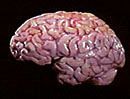
each person constructed of trillions of molecules and cells, but the human brain alone is filled with billions of cells forming trillions of trillions of connections.
The design of the human brain is truly awesome and beyond our understanding. Every cubic inch [2.54 centimeters] of the human brain contains at least 100 million nerve cells interconnected by 10 thousand miles of fibers.
It has been said that man's 3 pound brain is the most complex and orderly arrangement of matter in the entire universe! Far more complicated than any computer, the human brain is capable of storing and creatively manipulating seemingly infinite amounts of information. Its capabilities and potential stagger the imagination. The more we use it, the better it becomes.
The brain capabilities of even the smallest insects are mind-boggling. The tiny speck of a brain found in a little ant, butterfly or bee enable them not only to see, smell, taste and move, but even to fly with great precision. Butterflies routinely navigate enormous distances. Bees and ants carry on complex social organizations, building projects, and communications. These miniature brains put our computers and avionics to shame, in comparison.
The marvels of the bodies of both animals and man are evidently endless. Dr. A.E. Wilder-Smith makes this thought-provoking and humbling statement:
Imagine being given the task of constructing any living animal from scratch, using carbon, calcium, water, etc. It boggles the mind. Now imagine miniaturizing the program to grow it and run it. All the chemical information needed to construct an elephant is contained in a tiny speck (the fertilized egg cell).
"When one considers that the entire chemical information to construct a man, elephant, frog, or an orchid was compressed into two minuscule reproductive cells [sperm and egg nuclei], one can only be astounded.
In addition to this, all the information is available on the genes to repair the body (not only to construct it) when it is injured. If one were to request an engineer to accomplish this feat of information miniaturization, one would be considered fit for the psychiatric clinic."
It is certainly true that a machine carefully made by a craftsman reflects the existence of it's creator.
Reply #944 Monday, November 3, 2003 12:06 AM
each person constructed of trillions of molecules and cells, but the human brain alone is filled with billions of cells forming trillions of trillions of connections.
The design of the human brain is truly awesome and beyond our understanding. Every cubic inch [2.54 centimeters] of the human brain contains at least 100 million nerve cells interconnected by 10 thousand miles of fibers.
It has been said that man's 3 pound brain is the most complex and orderly arrangement of matter in the entire universe! Far more complicated than any computer, the human brain is capable of storing and creatively manipulating seemingly infinite amounts of information. Its capabilities and potential stagger the imagination. The more we use it, the better it becomes.
The brain capabilities of even the smallest insects are mind-boggling. The tiny speck of a brain found in a little ant, butterfly or bee enable them not only to see, smell, taste and move, but even to fly with great precision. Butterflies routinely navigate enormous distances. Bees and ants carry on complex social organizations, building projects, and communications. These miniature brains put our computers and avionics to shame, in comparison.
The marvels of the bodies of both animals and man are evidently endless. Dr. A.E. Wilder-Smith makes this thought-provoking and humbling statement:
Imagine being given the task of constructing any living animal from scratch, using carbon, calcium, water, etc. It boggles the mind. Now imagine miniaturizing the program to grow it and run it. All the chemical information needed to construct an elephant is contained in a tiny speck (the fertilized egg cell).
"When one considers that the entire chemical information to construct a man, elephant, frog, or an orchid was compressed into two minuscule reproductive cells [sperm and egg nuclei], one can only be astounded.
In addition to this, all the information is available on the genes to repair the body (not only to construct it) when it is injured. If one were to request an engineer to accomplish this feat of information miniaturization, one would be considered fit for the psychiatric clinic."
It is certainly true that a machine carefully made by a craftsman reflects the existence of it's creator.
Aleatoric
Reply #945 Monday, November 3, 2003 12:12 AM
Reply #945 Monday, November 3, 2003 12:12 AM
IPlural,
I would argue that the positional shift in the body of evolutionary (and other) scientists is more in regard to the theoretical mechanism for evolution that is the current theory, and not necessarily the fact of evolution, as a process, itself.
Also, the quote attributed to Wilder-Smith is either incorrect or taken out of context, as there are no scientific evolutionists who argue that 'matter left to itself' is the proximate cause of abiogenesis.
Regardless of the actual initial cause of life, matter was not left to itself. There was matter (atoms and molecules), energy (heat, radiation, light, etc.), motility (the atoms and molecules were in a substrate that allowed easy and substantial movement), and affinity (the tendency of atoms and molecules to combine only in certain combinations).
While I tend to lean toward an intelligent design to our universe, many of those who subscribe to what is called 'Intelligent Design' tend to have problems with consistency within their framework, even greater than any issues in the scientific theory of evolution.
There is little doubt that evolution, as a process, occurred, pretty much as the evidence indicates. What the details of that process are, and what the proximate causes are, are clearly matters of valid debate, and the theories we currently have may very well undergo substantial changes as our knowledge improves.
I would argue that the positional shift in the body of evolutionary (and other) scientists is more in regard to the theoretical mechanism for evolution that is the current theory, and not necessarily the fact of evolution, as a process, itself.
Also, the quote attributed to Wilder-Smith is either incorrect or taken out of context, as there are no scientific evolutionists who argue that 'matter left to itself' is the proximate cause of abiogenesis.
Regardless of the actual initial cause of life, matter was not left to itself. There was matter (atoms and molecules), energy (heat, radiation, light, etc.), motility (the atoms and molecules were in a substrate that allowed easy and substantial movement), and affinity (the tendency of atoms and molecules to combine only in certain combinations).
While I tend to lean toward an intelligent design to our universe, many of those who subscribe to what is called 'Intelligent Design' tend to have problems with consistency within their framework, even greater than any issues in the scientific theory of evolution.
There is little doubt that evolution, as a process, occurred, pretty much as the evidence indicates. What the details of that process are, and what the proximate causes are, are clearly matters of valid debate, and the theories we currently have may very well undergo substantial changes as our knowledge improves.
Aleatoric
Reply #946 Monday, November 3, 2003 12:40 AM
Reply #946 Monday, November 3, 2003 12:40 AM
The biggest flaw in the arguments of those who oppose evolution as a concept is that they nearly always define the process of evolution as a purely random process.
Arguments that a bucket of watch (or other complex object) parts will not assemble a working watch (or whatever) no matter how long you have is symptomatic of mapping a non random process onto a random one.
Given that the ways that atoms and molecules interact (and given that such interaction is specifically defined by their characteristics) is, by definition, non random, and any sequence of events that contain even one non random characteristic becomes non random, even if *every* other influence is completely random.
For some other items:
The human brain is arguably the most complex structure *that we know of*. No argument on the wonder of the human brain
Regardless of the complexity and informational content of DNA, there is nothing in there, that in principle at least, cannot necessarily be duplicated by a sequence of mutation and environmentally directed fitness. We may not know, but that doesn't mean we *cannot* know.
Even given that, as complex and wondrous as life is, how much more wondrous and complex a design that, instead of creating life, etc. from whole cloth, creates a system that with no more than a body of physical laws and raw materials can, over time, produce our entire universe, and also give us the knowledge to begin to understand that system.
IMHO, such a creation is much more worthy of God than any simple self centered stories we're given in dogma.
Arguments that a bucket of watch (or other complex object) parts will not assemble a working watch (or whatever) no matter how long you have is symptomatic of mapping a non random process onto a random one.
Given that the ways that atoms and molecules interact (and given that such interaction is specifically defined by their characteristics) is, by definition, non random, and any sequence of events that contain even one non random characteristic becomes non random, even if *every* other influence is completely random.
For some other items:
The human brain is arguably the most complex structure *that we know of*. No argument on the wonder of the human brain

Regardless of the complexity and informational content of DNA, there is nothing in there, that in principle at least, cannot necessarily be duplicated by a sequence of mutation and environmentally directed fitness. We may not know, but that doesn't mean we *cannot* know.
Even given that, as complex and wondrous as life is, how much more wondrous and complex a design that, instead of creating life, etc. from whole cloth, creates a system that with no more than a body of physical laws and raw materials can, over time, produce our entire universe, and also give us the knowledge to begin to understand that system.
IMHO, such a creation is much more worthy of God than any simple self centered stories we're given in dogma.
BX
Reply #947 Monday, November 3, 2003 6:48 AM
SO IS IT FINISHED

Reply #947 Monday, November 3, 2003 6:48 AM
| 928 by Citizen grayhaze - 11/2/2003 11:32:54 AM #925 by Mr ^^Arkantos^^ - 11/2/2003 10:03:59 AM IF EVLUATION IS FACT then why humen have same 2 hands, 2 foot, one head and 2 eyez.......y they have not "evolved" into something else with 2 heads or wings or something like thisEVALUATION.........has it finished........or??????Okay, I give in. Your mere existance conclusively disproves evolution. |
SO IS IT FINISHED

Doreen
Reply #948 Monday, November 3, 2003 9:53 AM

Reply #948 Monday, November 3, 2003 9:53 AM
Well, no, they're dead. They killed themselfs. One definition of the word 'cult' is
"A religion or religious sect generally considered to be extremist or false, with its followers often living in an unconventional manner under the guidance of an authoritarian, charismatic leader."
#936 by Citizen r3fr - 11/2/2003 10:43:30 PM
call it what "you" want, but remember as nutty as they seem "you & I" who have our own diff ideas of what/who God is, most likely makes us even seem to others like nuts... hehe
[Message Edited]
"A religion or religious sect generally considered to be extremist or false, with its followers often living in an unconventional manner under the guidance of an authoritarian, charismatic leader."
#936 by Citizen r3fr - 11/2/2003 10:43:30 PM
call it what "you" want, but remember as nutty as they seem "you & I" who have our own diff ideas of what/who God is, most likely makes us even seem to others like nuts... hehe
[Message Edited]
IPlural
Reply #949 Monday, November 3, 2003 10:04 AM
Joeys were, blah blah blah by the NAZI. Who wasn't, get a grip...
sheesh....

Reply #949 Monday, November 3, 2003 10:04 AM

Joeys were, blah blah blah by the NAZI. Who wasn't, get a grip...
sheesh....
r3fr
Reply #950 Monday, November 3, 2003 3:36 PM
If thats a quote of me, sorry, I meant to say Scriptures. Though i'm not for sure that they've added books, because i've never looked. I've just seen the "trinity verse" (saying Father, Son, and holy spirit are the same).
Understood.
If there was nothing, how was there something?
I was stating the definition. Thats what it is, thats what they were, but yes, they might have thought other people were nuts.
A lot of people weren't. Too many to count.
Reply #950 Monday, November 3, 2003 3:36 PM
| They have? |
If thats a quote of me, sorry, I meant to say Scriptures. Though i'm not for sure that they've added books, because i've never looked. I've just seen the "trinity verse" (saying Father, Son, and holy spirit are the same).
| I would have to look into JW before I say anything further. Only reason I said anything about mormons is because my wife was one and I was one too. Been there, done that. No misunderstandings... |
Understood.
| Regardless of the actual initial cause of life, matter was not left to itself. There was matter (atoms and molecules), energy (heat, radiation, light, etc.), motility (the atoms and molecules were in a substrate that allowed easy and substantial movement), and affinity (the tendency of atoms and molecules to combine only in certain combinations). |
If there was nothing, how was there something?
| call it what "you" want, but remember as nutty as they seem "you & I" who have our own diff ideas of what/who God is, most likely makes us even seem to others like nuts... hehe |
I was stating the definition. Thats what it is, thats what they were, but yes, they might have thought other people were nuts.
| Joeys were, blah blah blah by the NAZI. Who wasn't, get a grip... sheesh.... |
A lot of people weren't. Too many to count.
joetheblow
Reply #951 Monday, November 3, 2003 4:04 PM

Reply #951 Monday, November 3, 2003 4:04 PM
Hey I just came across this:
http://channels.netscape.com/ns/news/package.jsp?name=fte/originatelife/originatelife
And
http://channels.netscape.com/ns/news/package.jsp?name=fte/notbelieveingod/notbelieveingod
What does it all mean???
http://channels.netscape.com/ns/news/package.jsp?name=fte/originatelife/originatelife
And
http://channels.netscape.com/ns/news/package.jsp?name=fte/notbelieveingod/notbelieveingod
What does it all mean???
IPlural
Reply #952 Monday, November 3, 2003 4:15 PM
Reply #952 Monday, November 3, 2003 4:15 PM
what they should have because others did?
get real...
and playing victim is old hat and an extream bore
[Message Edited]
get real...
and playing victim is old hat and an extream bore
[Message Edited]
joetheblow
Reply #953 Monday, November 3, 2003 4:17 PM
Reply #953 Monday, November 3, 2003 4:17 PM
I did the poll for if you think God created all of this and it leads by 3 percent against evoltion and God created.
For me it had to start somewhere
But I see evolution taking a role, a big one, after everything started.
I believe life came from:
God's creation 37%
Both evolution and God's creation 34%
Evolution: billions of years of random atomic collisions 22%
I have no idea! 7%
Total Votes: 2827
Unscientific poll of course

For me it had to start somewhere
But I see evolution taking a role, a big one, after everything started.
I believe life came from:
God's creation 37%
Both evolution and God's creation 34%
Evolution: billions of years of random atomic collisions 22%
I have no idea! 7%
Total Votes: 2827
Unscientific poll of course

joetheblow
Reply #954 Monday, November 3, 2003 4:21 PM
Reply #954 Monday, November 3, 2003 4:21 PM
Here is a theory of mine:
Human beings much like other animal crave understanding what is around them to feel more assured about their safety.
It is my belief that human beings have not 'evolved' enough to see that we want somethings to be true or the Truth merely because of animalistic safety reasons.
In other words, if we know this is what it is, we feel safer going out of our house in the morning.
Human beings much like other animal crave understanding what is around them to feel more assured about their safety.
It is my belief that human beings have not 'evolved' enough to see that we want somethings to be true or the Truth merely because of animalistic safety reasons.
In other words, if we know this is what it is, we feel safer going out of our house in the morning.
MadIce
Reply #956 Monday, November 3, 2003 5:38 PM

Reply #956 Monday, November 3, 2003 5:38 PM
Maybe this has been asked before, but who or what created God? To me that is an obvious question in this discussion.
BTW: I do not have a religion.
[Message Edited]
BTW: I do not have a religion.
[Message Edited]
joetheblow
Reply #957 Monday, November 3, 2003 5:52 PM
Reply #957 Monday, November 3, 2003 5:52 PM
Who created God?
Why God of course.
One of those self creation techniques.
Its all clear to me now.
:CONFUSED:
Why God of course.
One of those self creation techniques.
Its all clear to me now.
:CONFUSED:
Aleatoric
Reply #958 Monday, November 3, 2003 6:34 PM
Reply #958 Monday, November 3, 2003 6:34 PM
MadIce,
That's pretty much the 64 million dollar question.
Human beings tend to anthropomorphise what they perceive and speculate about.
It is often difficult to imagine that something can exist without creation, because the only direct knowledge we have is of things that already exist or that we create. As a result, we think that what already exists was not only created, but was created by someone very much like us, only more powerful or knowledgable, because that is really the only context we have.
As we start to wonder where we came from, where the earth came from, where the universe came from, we're in the position of either believing that each was created, in one fashion or another, or that each always existed. Thing is, when we imagine a creator, we're still left with an origination problem. Either the creator was created (and so on, ad infinitum), or the creator always existed. If we then argue that the creator always existed, it is also logically consistent to argue that the universe (for example) always existed, in essence, substituting two complexities for one complexity (one case of eternal existence + creation or simply one case of eternal existence).
Some argue that if there was no creator, but that there was an origination point, then we become compelled to state that this origination sprang from nothing. But what is nothing? Some will say it is the absence of all things, which is intuitive, but possibly simplistic. But take the number zero, for example. For many, it represents an absence of something, i.e., it is a placeholder to represent no objects. But mathematically, zero is not necessarily empty. It can be expressed as the sum of two equal magnitudes of opposite direction (positive and negative numbers in the set of integers are one example of this).
On a physical level, what we generally consider as the quintessential representation of nothing is the vacuum of outer space. Thing is, a vacuum isn't empty (even if we're not counting any stray particles of matter that may exist). It literally seethes with energy, and this energy can be measured. At this point in our knowledge, the general framework does not include the existence of an area or time where literally *nothing* exists (or existed).
There's no way to even really begin to answer the question of created as opposed to simply instantiated. All the same arguments about which came first, which always existed (or not) and so on, apply pretty much equally to both points of view.
However, all of the above notwithstanding, my position is that the anthropomorphic God described in dogma was created by man. That does not argue that God does not exist, but that the God that really exists is as far beyond the dogmatic God as we as humans are beyond the simplest single celled forms of life.
That's pretty much the 64 million dollar question
.Human beings tend to anthropomorphise what they perceive and speculate about.
It is often difficult to imagine that something can exist without creation, because the only direct knowledge we have is of things that already exist or that we create. As a result, we think that what already exists was not only created, but was created by someone very much like us, only more powerful or knowledgable, because that is really the only context we have.
As we start to wonder where we came from, where the earth came from, where the universe came from, we're in the position of either believing that each was created, in one fashion or another, or that each always existed. Thing is, when we imagine a creator, we're still left with an origination problem. Either the creator was created (and so on, ad infinitum), or the creator always existed. If we then argue that the creator always existed, it is also logically consistent to argue that the universe (for example) always existed, in essence, substituting two complexities for one complexity (one case of eternal existence + creation or simply one case of eternal existence).
Some argue that if there was no creator, but that there was an origination point, then we become compelled to state that this origination sprang from nothing. But what is nothing? Some will say it is the absence of all things, which is intuitive, but possibly simplistic. But take the number zero, for example. For many, it represents an absence of something, i.e., it is a placeholder to represent no objects. But mathematically, zero is not necessarily empty. It can be expressed as the sum of two equal magnitudes of opposite direction (positive and negative numbers in the set of integers are one example of this).
On a physical level, what we generally consider as the quintessential representation of nothing is the vacuum of outer space. Thing is, a vacuum isn't empty (even if we're not counting any stray particles of matter that may exist). It literally seethes with energy, and this energy can be measured. At this point in our knowledge, the general framework does not include the existence of an area or time where literally *nothing* exists (or existed).
There's no way to even really begin to answer the question of created as opposed to simply instantiated. All the same arguments about which came first, which always existed (or not) and so on, apply pretty much equally to both points of view.
However, all of the above notwithstanding, my position is that the anthropomorphic God described in dogma was created by man. That does not argue that God does not exist, but that the God that really exists is as far beyond the dogmatic God as we as humans are beyond the simplest single celled forms of life.
Jafo
Reply #959 Monday, November 3, 2003 7:07 PM

Reply #959 Monday, November 3, 2003 7:07 PM
Man created God.....a 'deity' is a manufactured concept generated from fear of the unknown and man's need to 'know it all'.
If you cannot understand something, make it up....
bordfryr
Reply #960 Monday, November 3, 2003 7:14 PM

Reply #960 Monday, November 3, 2003 7:14 PM
It would be more accurate and truthful to say that God created man, and then man returned the favor.
Please login to comment and/or vote for this skin.
Welcome Guest! Please take the time to register with us.
There are many great features available to you once you register, including:
- Richer content, access to many features that are disabled for guests like commenting on the forums and downloading skins.
- Access to a great community, with a massive database of many, many areas of interest.
- Access to contests & subscription offers like exclusive emails.
- It's simple, and FREE!
|
|
Page 48 of 56 | |
|
|---|
Reply #941 Sunday, November 2, 2003 11:43 PM